Create a Balanced Plate for Better Health
Building a Balanced Plate for Better Health
Eating a balanced diet is essential for staying healthy and energetic. A well-planned meal helps provide the nutrients your body needs to function properly. Let’s explore how to create a balanced plate that includes all the necessary elements to nourish your body.
What is a Balanced Plate?
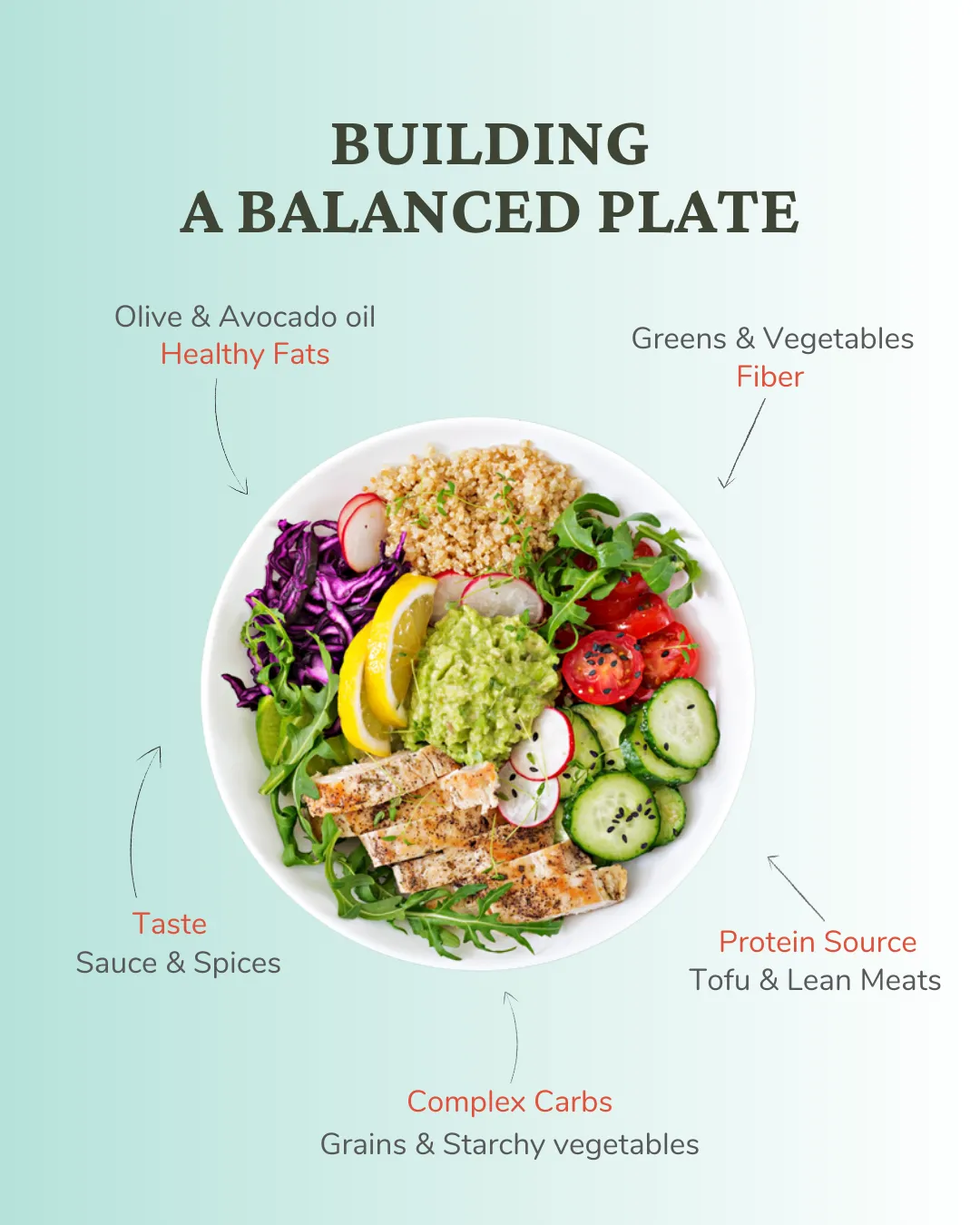
A balanced plate includes different types of foods to provide a range of nutrients. It typically includes:
- Healthy Fats: Such as olive and avocado oil.
- Proteins: Like tofu and lean meats.
- Fiber: From greens and vegetables.
- Complex Carbs: Grains and starchy vegetables.
- Taste Enhancers: Sauces and spices.
Importance of a Balanced Diet
Eating a balanced meal is vital for maintaining overall health. It helps:
- Boost Energy: Meals with the right mix of carbs, proteins, and fats help sustain energy levels.
- Support Growth: Especially important for children and teenagers as they grow.
- Prevent Diseases: Aids in reducing the risk of chronic diseases like heart disease and diabetes.
- Manage Weight: Balanced meals can help you maintain a healthy weight.
Step-by-Step Guide to Building Your Balanced Plate
Creating a balanced plate looks something like this:
- Start with Proteins: Choose foods like lean meats, tofu, or beans. Proteins are the building blocks of the body.
- Add Complex Carbs: Include grains like brown rice or starchy veggies like sweet potatoes.
- Include Healthy Fats: Add a small amount of olive or avocado oil to your meal.
- Fill Half Your Plate with Vegetables: Aim for a variety of colors to ensure a range of nutrients.
- Add Sauce and Spices: Use these for added flavor without excess calories.
Healthy Fats: Olive and Avocado Oil
Healthy fats are essential for brain health and hormone production. Olive oil and avocado oil are great choices because they are rich in monounsaturated fats which are good for the heart. Use them in moderation by drizzling a little over salads or cooked vegetables.
Proteins: Tofu and Lean Meats
Proteins play a critical role in muscle repair and growth. Opt for leaner meat options like chicken breast or plant-based sources like tofu for a healthier choice. Eating enough protein is fundamental for body repair and growth.
Fiber: Greens and Vegetables
Fiber helps digestion and keeps you feeling full longer. Vegetables like spinach, broccoli, and carrots are high in fiber and essential vitamins. Aim to fill half your plate with a variety of colorful veggies.
Complex Carbs: Grains and Starchy Vegetables
Choose complex carbohydrates as they break down more slowly, providing steady energy. Whole grains like brown rice or quinoa and starchy vegetables like sweet potatoes are excellent choices.
Taste: Sauces and Spices
Sauces and spices can make healthy foods taste better. Go for herbs and spices instead of high-calorie sauces. This way, you get a flavorful meal without extra calories.
Final Thoughts
Building a balanced plate ensures you get all the nutrients your body requires. By following these simple guidelines, you can prepare meals that support your health goals. Remember, eating well doesn't have to be complicated. Start today by making small changes to your meals, and enjoy the benefits of a balanced diet.
